

From Victorian Steam to the Modern Era
The railway through the Cam Valley has played a vital role in connecting communities, shaping local development, and supporting journeys for generations.
From its origins in the great Victorian expansion of Britain’s rail network to its continued importance today, the area has witnessed significant changes in technology, travel, and the surrounding landscape.
The railway through the Cam Valley is unusual: rather than a single line built by one company, it developed as the meeting point of two competing routes into Cambridge, one from Liverpool Street and one from King’s Cross. Together, these lines transformed the valley from a collection of rural villages into a well-connected corridor, linking South Cambridgeshire to London and beyond.
Development of the Routes
The development of the railway through the Cam Valley is a fascinating tale of fierce rivalry between early Victorian rail companies competing to connect Cambridge to London.
Before the Railway
Before the mid-19th century, travel through the Cam Valley relied on roads and horse-drawn vehicles. Journeys between villages were manageable, but reaching Cambridge, and especially London, was slow and costly.
As industry, agriculture, and the university city of Cambridge expanded, pressure grew for faster transport. The railway age would arrive quickly, but not in a single, coordinated way.
The First Railway: Liverpool Street to Cambridge (1840s)
The first railway to reach Cambridge came from the south.
In 1845, the Eastern Counties Railway (ECR) opened its line from London Liverpool Street to Cambridge, running via Bishop’s Stortford and Audley End with stations at Whittlesford and Shelford. This line forms part of today’s West Anglia Main Line. It provided Cambridge with its first direct rail connection to London and quickly became an important route for passengers, goods, and agricultural produce.
A Rival Route: King’s Cross to Cambridge (1850s)
Seeking a piece of the lucrative Cambridge market, the Royston and Hitchin Railway constructed a competing line from Hitchin. This route pushed north-east into the Cam Valley, establishing stations at Meldreth and Shepreth by 1851. Initially, because the ECR refused to let its rival enter Cambridge, passengers arriving at Shepreth actually had to finish their journey via horse-drawn coach. This impasse was resolved a year later in 1852 when a link line was completed via Foxton, finally allowing Great Northern Railway (GNR) trains a clear run into Cambridge and securing the foundational link to London King’s Cross.
Growth and Everyday Life
With the railway in place, life in the Cam Valley changed rapidly.
Local stations became vital hubs for both passengers and goods. Farmers and businesses could transport produce more efficiently, while residents gained easier access to Cambridge for work, education and trade. Stations were not just transport nodes but social spaces and station staff often lived locally and played key roles in village life.
The railway also linked the Cam Valley to London’s expanding rail network and excursion trains opened up leisure travel for the first time, helping transform rural villages into connected communities.
Stations of the Cam Valley Network
Meldreth
Opened 1st August 1851. It was a vital transit hub for local asbestos products and agricultural goods.
Shelford
Opened 30th July 1845. It became a busy junction station in 1865 when the Stour Valley Line branched off towards Haverhill and Sudbury.
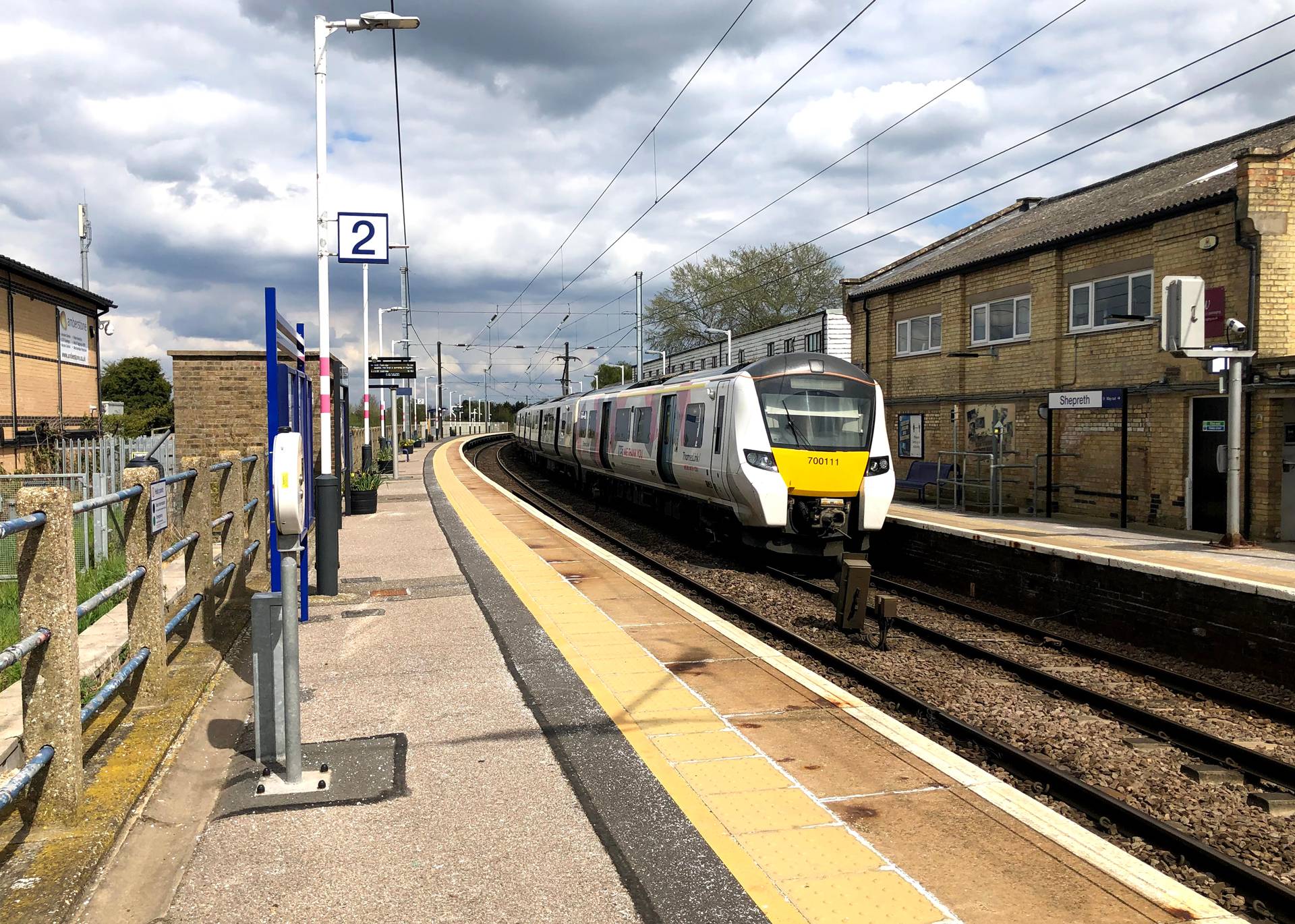
Shepreth
Opened 1st August 1851. Served as the initial boundary between competing railway companies. It later expanded with private sidings to feed the local cement and lime works.
Whittlesford Parkway
Opened in 30th July 1845. Originally named just Whittlesford, it historically served local maltings and trade. It was later rebranded as a "Parkway" to serve modern highway commuters via the A505 and M11.
Foxton
Opened in August 1852 when the connection line directly into Cambridge was completed. Handled large volumes of agricultural freight and mined coprolite. The Barrington Light Railway was opened in 1927.
Cambridge South
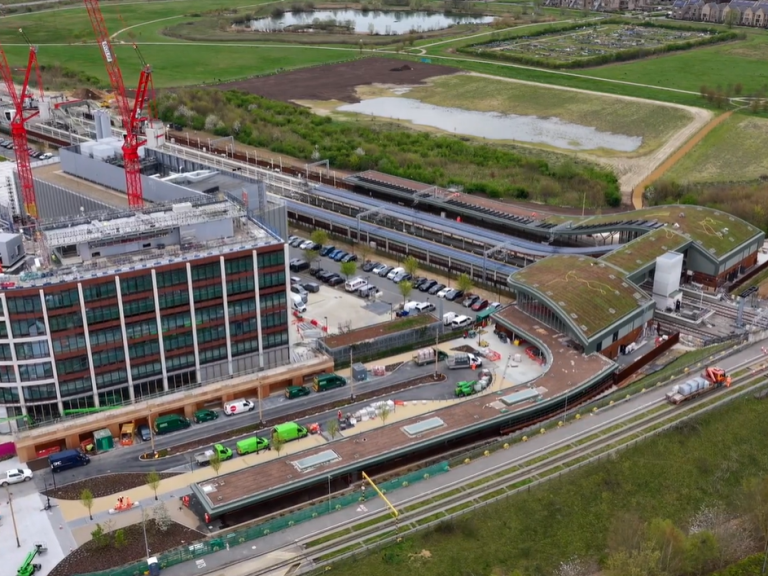
Opened on 28th June 2026, the station has been built to serve the Cambridge Biomedical Campus.
The Industrial Age
The Thriving Fruit and Produce Trade
The valley of the River Rhee (a major tributary of the Cam) was historically famous for its vast fruit orchards. The arrival of the railway sparked a massive commercial boom, connecting local growers directly to major markets in London, Manchester, and the industrial North.
- Meldreth and Shepreth: During the peak summer harvest, Meldreth became an absolute hive of activity. The station yard was packed from early morning until late at night with horse-drawn trolleys delivering baskets of apples, plums, raspberries, and gooseberries from surrounding farms. Special fruit-wagon goods trains waited in the sidings, shunted into place by heavy station horses.
- The Seasonal Influx: The fruit trade significantly altered passenger demographics. Every summer, a massive wave of seasonal fruit pickers from London travelled down to South Cambridgeshire. These working-class families packed out third-class carriages, completely transforming the quiet local stations into bustling seasonal hubs.
- Fowlmere Watercress: Nearby in Fowlmere, massive 100-acre watercress beds relied on the railway. Freshly harvested cress was rushed daily by horse and cart to Shepreth station to be sent out on rapid express delivery to urban dinner tables across the country.
- The Chivers Link: The famous Chivers Jam Factory (based nearby in Histon) relied heavily on South Cambridgeshire fruit. In fact, when the newly built Eastwood Cement Works at Barrington began billowing sulphurous smoke and dust in the late 1920s, it scorched and ruined the local raspberry and plum blossoms, leading Chivers to launch a landmark High Court injunction to protect the valley’s precious fruit trade.
Heavy Industry: Coprolite, Cement, and Chemicals
Beyond agriculture, the geological wealth of the Cam Valley demanded heavy freight infrastructure, reshaping how stations were built.
- The Coprolite Boom & Fisons: In the late 19th century, a massive seam of “coprolite” (fossilised, phosphate-rich nodules) was discovered running through the valley sub-soils. It was dug up by thousands of migrant labourers and rushed to the railways for use as industrial fertiliser. This boom actually birthed the chemical giant Fisons, which operated weed-killing trains stabled at Foxton station for decades.
- Tramways and Sidings: Foxton, Shepreth, and Meldreth were all modified with extensive goods yards, sidings, and industrial narrow-gauge tramway links. The Atlas Stone Company built a dedicated tramline in 1901 directly to Meldreth station to transship asbestos and cement products onto the mainline.
- Whittlesford Parkway: Serving as a key freight hub on the West Anglia Main Line, Whittlesford featured heavy-duty industrial sidings. Up until the late 20th century, it managed extensive freight traffic, including grain wagons and Ministry of Defence (MOD) shipments for the nearby Carver Barracks, alongside a dedicated branch line serving the massive Ciba-Geigy chemical factory nearby.
Change and Decline in the 20th Century
Like many rural lines, the Cam Valley railway experienced significant changes during the 20th century.
By the mid‑20th century, the traditional goods yards that had once been central to village stations were in decline. As lorries replaced rail for local deliveries, and freight became increasingly centralised, these small-scale facilities became uneconomic. Many were closed in the 1960s as part of a wider modernisation of Britain’s railways.
The rise of buses and car travel reduced passenger numbers, and cost-cutting measures led to the closure of some smaller stations. Unlike many rural railways, the two main routes serving the Cam Valley largely survived the Beeching cuts of the 1960s. While smaller stations such as Harston were closed, the core lines to both Liverpool Street and King’s Cross remained open, reflecting their continued importance as strategic routes into Cambridge.
The electrification of the lines in the late 1980s shifted the demographic entirely toward London and Cambridge commuters. Whittlesford Parkway gained large car parks to accommodate park-and-ride travellers driving in from the surrounding countryside.
The Railway Now and Looking Ahead
The Modern Railway
Today, the legacy of these two lines is still visible.
The Cam Valley sits at the junction of:
- The West Anglia Main Line (Liverpool Street route)
- The Cambridge line / Great Northern route (King’s Cross route)
Passengers benefit from:
- Frequent services to London
- Modern, electrified infrastructure and improved journey times
- Access to a wider network, with Thameslink services connecting to Gatwick and Brighton, CrossCountry serices to Birmingham and the north of England, and Greater Anglia services to Norwich and the Norfolk coast.
What was once a locally focused rural railway now forms part of an integrated, high-frequency network, enabling journeys across much of England that would have been unimaginable to its 19th-century users.
Looking to the Future
The modern footprint of the Cam Valley railway continues to expand, most notably with the arrival of Cambridge South, a £250 million four-platform station built to serve the rapidly growing Cambridge Biomedical Campus and Addenbrooke’s Hospital. Strategically located near the historic Trumpington junction, it links both of the valley’s long-established London routes, the West Anglia Main Line to Liverpool Street and the Cambridge Line to King’s Cross, bringing the railway’s 180‑year evolution firmly into the present.
Notably, the station has been built without a goods yard, reflecting a complete reversal of the line’s original purpose: instead of handling fruit, coal and freight, it is designed entirely around today’s high-volume passenger flows, marking the transformation of the Cam Valley railway from a rural goods route into a busy metropolitan artery.
Further reading
Memorable Moments
A collection of “Memorable Moments with David Piggott” presented to him on his retirement
The Meldreth History Society
There are a series of fascinating illustrated articles about Meldreth Railway Station on the Meldreth History Website
The History of the Railway in the Rhee Valley
An article on the History of the Railway in the Rhee Valley. Did you know that until 1851 Shepreth was a terminus? Onward travel for passengers to Cambridge was provided for a short while by a four horse omnibus service five times a day to Trinity Street in Cambridge?
Trumpington Station
Did you know that a temporary station, Trumpington railway station, was once located approximately 570 m (1,870 ft) north of the current Cambridge South station site? It was specifically constructed for the Royal Agricultural Society’s show for four days between 4 July and 8 July 1922. After the event concluded, the station was then permanently demolished. Nothing of the original station survives or is visible today.
Continue exploring the Cam Valley by rail
There's so much to explore in the Cam Valley.